



The Different Kinds of Hydroponic Systems
Contents
- 1 The Different Kinds of Hydroponic Systems
- 1.1 The Wick Hydroponic System
- 1.2 Deep Water Culture (DWC) Hydroponic System
- 1.3 Nutrient Film Technique (NFT) Hydroponic System
- 1.4 Ebb and Flow (Flood and Drain) Hydroponic System
- 1.5 Drip Hydroponic System
- 1.6 Aeroponics System
- 1.7 Which Hydroponic System Is Right for You?
- 1.8 Conclusion: The Different Kinds of Hydroponic Systems
- 1.9 The Different Kinds of Hydroponic Systems
- 1.10 Laa Dee Daa Eco-Friendly and Hydroponics
- 1.11 Transform Your Indoor/Outdoor Space with Aqua Gardening
- 1.12 Hydroponic Products and Accessories
 Hydroponic gardening has become a cornerstone of modern, sustainable food production. It allows plants to thrive without soil, using nutrient-enriched water and controlled environments to produce faster, healthier, and higher-yielding crops.
Whether you’re a beginner growing herbs in your kitchen or a commercial farmer scaling production, understanding the different kinds of hydroponic systems is key to success.
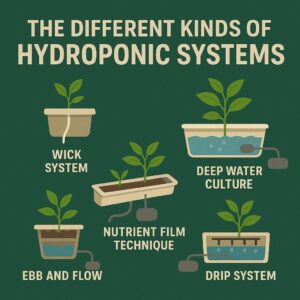
In this guide, we’ll explore the six main types of hydroponic systems, how they work, and their pros and cons, helping you choose the best system for your space, budget, and growing goals.
-
The Wick Hydroponic System
The Wick System is one of the simplest and most accessible hydroponic setups, making it ideal for beginners. It uses a wick, often made of cotton or nylon, to draw nutrient solution from a reservoir into the growing medium where the plant roots absorb it.
How it works:
- A container holds the nutrient solution below the growing tray.
- One or more wicks connect the two sections, carrying moisture upward via capillary action.
- The plants sit in a medium such as perlite, vermiculite, or coco coir, which remains damp but not waterlogged.
Advantages:
- No pumps or electricity required.
- Low maintenance and easy to build.
- Perfect for small herbs, leafy greens, or classroom projects.
Disadvantages:
- Limited nutrient delivery, unsuitable for larger or high-demand plants.
- The wicks can clog over time.
If you’re new to hydroponics, the wick system offers a stress-free introduction to soil-free gardening.
-
Deep Water Culture (DWC) Hydroponic System
Deep Water Culture is another popular and efficient hydroponic system. In DWC, plant roots are suspended directly in a nutrient-rich, oxygenated water solution.
How it works:
- Plants sit in net pots above a reservoir of nutrient solution.
- An air pump and air stone continuously oxygenate the water, ensuring roots don’t suffocate.
Advantages:
- Simple design with fast plant growth.
- Excellent oxygen and nutrient availability.
- Ideal for leafy greens like lettuce and spinach.
Disadvantages:
- Requires constant aeration; a power failure can quickly damage roots.
- Water temperature and pH must be carefully maintained.
DWC systems are efficient and easy to scale, making them a great option for both home growers and commercial setups.
-
Nutrient Film Technique (NFT) Hydroponic System
The Nutrient Film Technique is a more advanced hydroponic method used in many commercial farms. Plants are grown in channels where a thin film of nutrient solution flows continuously across their roots.
How it works:
- A pump circulates the nutrient solution from a reservoir through sloped channels.
- The excess drains back to the reservoir, creating a closed-loop system.
Advantages:
- Extremely efficient use of water and nutrients.
- Roots get both oxygen and moisture simultaneously.
- Scalable for commercial production.
Disadvantages:
- Pump failure can quickly dry out roots.
- Channels can become blocked with roots or algae.
NFT systems are ideal for experienced growers who want a clean, high-performance setup for herbs, lettuce, or strawberries.
-
Ebb and Flow (Flood and Drain) Hydroponic System
The Ebb and Flow or Flood and Drain System uses cycles of flooding and draining to deliver nutrients to plant roots.
How it works:
- The grow tray is periodically flooded with nutrient solution from a reservoir using a pump.
- After a set time, the solution drains back, allowing roots to oxygenate before the next flood.
Advantages:
- Provides excellent root aeration.
- Suitable for many plant types, including larger fruiting plants.
- Allows flexible control of nutrient delivery.
Disadvantages:
- Requires a timer and consistent maintenance.
- Pump or timer failure can disrupt watering cycles.
Ebb and flow systems are versatile and effective, making them a favourite among experienced hydroponic growers.
-
Drip Hydroponic System
The Drip System is one of the most widely used hydroponic methods, both for small-scale gardens and commercial operations.
How it works:
- Nutrient solution is pumped through tubing and dripped slowly onto each plant’s base.
- Excess solution drains back to the reservoir for reuse.
Advantages:
- Delivers precise control over watering and nutrients.
- Works for almost any type of plant.
- Scalable and customisable.
Disadvantages:
- Drippers can clog easily.
- Requires monitoring of flow rates and pH levels.
Drip systems are efficient and adaptable, perfect for growers who want full control over feeding schedules.
-
Aeroponics System
Aeroponics represents the cutting edge of hydroponic technology. Plants are suspended in the air, and nutrient mist is sprayed directly onto their exposed roots at regular intervals.
How it works:
- A fine mist of nutrient solution is generated by nozzles or ultrasonic foggers.
- The roots absorb nutrients and oxygen directly from the air and mist.
Advantages:
- Maximum oxygen exposure leads to rapid growth.
- Minimal water and nutrient usage.
- Space-efficient, ideal for vertical farming.
Disadvantages:
- High setup and maintenance costs.
- Misters can clog, and any power failure is critical.
Aeroponics offers unmatched efficiency and productivity, though it’s best suited for experienced or commercial growers.
Which Hydroponic System Is Right for You?
Choosing the right hydroponic system depends on your goals, space, and resources.
- Beginners: Start with a Wick System or DWC for ease of use.
- Intermediate growers: Try Ebb and Flow or Drip Systems for better control.
- Advanced and commercial setups: Consider NFT or Aeroponics for high efficiency and yields.
Each method provides unique advantages, and all share the same principle of delivering nutrients directly to plant roots, enabling faster growth and higher yields than traditional soil gardening.
Other Types of Hydroponics
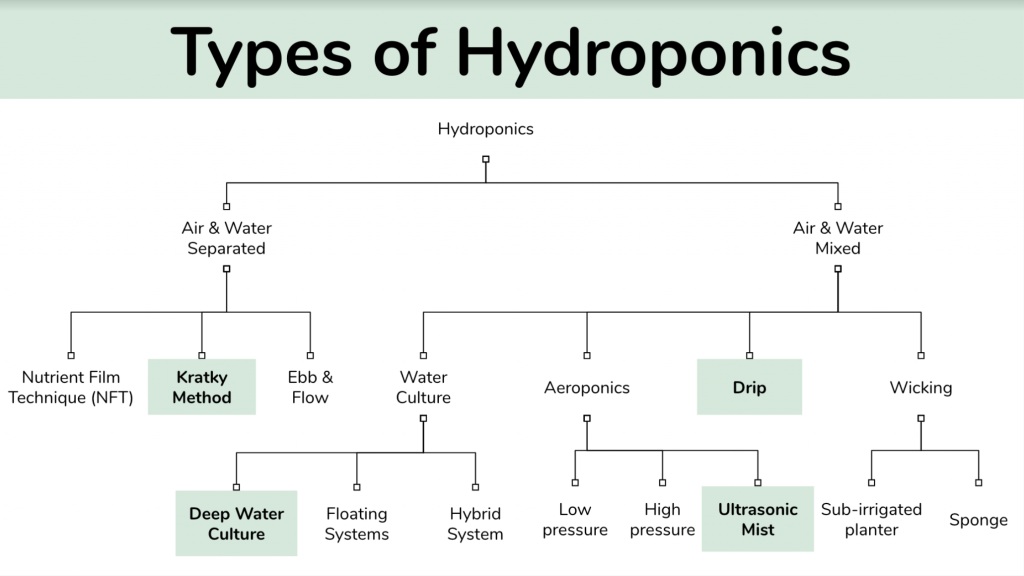
There are two types of hydroponics: Air and Water Separated and Air and Water Mixed, and there are several variations of these.
Conclusion: The Different Kinds of Hydroponic Systems
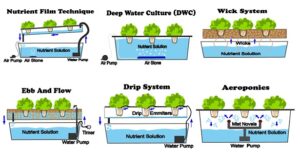 Hydroponic systems are transforming how we think about growing food. From simple wick setups to high-tech aeroponics, each system offers opportunities for sustainable, space-efficient gardening. Whether you’re cultivating herbs on your balcony or managing a large vertical farm, hydroponics allows you to grow more with less, less water, less space, and no soil required.
The Different Kinds of Hydroponic Systems
Pingback: The Kratky Hydroponic Method Explained - Laa Dee Daa