




Understanding the DWC Floating System
Contents
- 1 Understanding the DWC Floating System
- 1.1 A Smart Solution for Hydroponic Gardening
- 1.2 What Is a DWC Floating System?
- 1.3 How the DWC Floating System Works
- 1.4 Benefits of the DWC Floating System
- 1.5 Challenges of the DWC Floating System
- 1.6 How to Set Up a DWC Floating System
- 1.7 Best Plants for the DWC Floating System
- 1.8 Tips for Success with DWC Floating Systems
- 1.9 Conclusion
- 1.10 Deep Water Culture Hydroponic System
- 1.11 How to Set Up a Small Hydroponic Kit at Home
- 1.12 DWC Hybrid System
A Smart Solution for Hydroponic Gardening
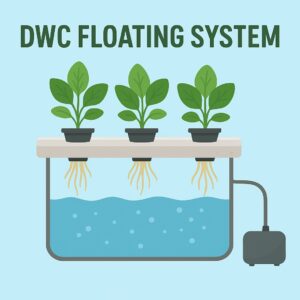 Hydroponic farming is transforming the way we grow plants, eliminating soil and using nutrient-rich water solutions to produce healthier, faster-growing crops. Among the many hydroponic techniques available, the DWC Floating System (also known as the Raft System) has gained popularity for its simplicity, scalability, and efficiency.
This system combines the principles of Deep Water Culture (DWC) with a floating raft mechanism, allowing plants to sit on the surface of nutrient-enriched water while their roots grow freely beneath. It’s an ideal solution for both commercial hydroponic operations and home gardeners seeking consistent, high-quality yields.
What Is a DWC Floating System?
The DWC Floating System is a type of hydroponic setup where plants are placed in net pots fixed into floating rafts — typically made from polystyrene or foam — that sit on top of a reservoir filled with nutrient solution. The raft floats freely, adjusting naturally with the water level, ensuring that plant roots are always submerged in the nutrient-rich water below.
This system is similar to traditional Deep Water Culture, where plant roots are suspended in water, but with the added advantage of scalability and stability, making it especially suited for larger-scale or commercial hydroponic applications.
How the DWC Floating System Works
A DWC Floating System is surprisingly straightforward. Here’s how it operates:
-
-
- Reservoir Tank:
A large container or trough is filled with water mixed with hydroponic nutrients, creating a balanced environment for root growth. - Floating Raft:
A lightweight board (often polystyrene) floats on the surface of the water. Holes are cut into the raft to hold net pots that support the plants. - Net Pots and Growing Medium:
Plants are placed in net pots filled with a lightweight medium such as clay pebbles or rockwool. The roots dangle below, directly into the nutrient solution. - Aeration:
Air pumps and air stones are placed in the reservoir to oxygenate the water, preventing root rot and promoting vigorous plant growth.
- Reservoir Tank:
-
As the plants grow, their roots extend deeper into the water, absorbing essential minerals, oxygen, and moisture continuously. Because the raft floats, it automatically adjusts to water level changes, keeping the root zone perfectly positioned.
Benefits of the DWC Floating System
The DWC Floating System offers numerous advantages for growers of all levels. Here are some of the most notable:
- Scalable and Efficient
One of the greatest strengths of the floating system is scalability. It’s easy to expand for large-scale commercial production — simply add more rafts and connect reservoirs. Many commercial lettuce farms use this system for year-round production.
- Consistent Water and Nutrient Access
Because the raft floats directly on the water, plants are never deprived of nutrients or moisture. The system ensures continuous root exposure to essential elements, resulting in uniform and consistent growth.
- Low Maintenance
Once the system is established, it requires minimal upkeep. Apart from checking pH levels and oxygenation, maintenance involves simply topping up nutrients and water as needed.
- Energy Efficient
Unlike systems that rely on constant water movement or drip irrigation, the floating system consumes very little power — mostly just for the air pumps that maintain oxygen levels.
- Space Saving and Clean
There’s no soil involved, meaning no mess and no risk of soil-borne pests. It’s an excellent choice for indoor growing, greenhouses, and urban farming setups.
Challenges of the DWC Floating System
While the DWC Floating System is user-friendly, there are a few challenges growers should be aware of:
-
-
- Water Temperature Control:
If the water temperature rises above 24°C, oxygen levels decrease, leading to root issues. Insulation or shading may be necessary in warm climates. - Algae Growth:
Light exposure to the reservoir can promote algae, which compete with plants for nutrients. Using opaque materials or covers can prevent this. - Nutrient Balance:
The nutrient solution must be checked regularly for pH (ideally 5.8–6.2) and electrical conductivity (EC) to ensure optimal growing conditions. - Limited Crop Variety:
The system works best for lightweight crops like leafy greens and herbs, though heavier fruiting plants can be grown with extra support.
- Water Temperature Control:
-
How to Set Up a DWC Floating System
Creating a floating hydroponic system at home is easier than you might think. Here’s a step-by-step guide:
Step 1: Choose the Right Container
Select a reservoir or trough deep enough to allow plant roots to grow freely. For small home setups, a large plastic tub or bin works perfectly.
Step 2: Prepare the Floating Raft
Cut a sheet of polystyrene or foam board to fit the reservoir. Drill or cut evenly spaced holes to fit your net pots securely.
Step 3: Install the Aeration System
Place air stones at the bottom of the reservoir and connect them to an air pump to keep the water oxygenated.
Step 4: Mix the Nutrient Solution
Fill the tank with water and mix in a hydroponic nutrient solution based on your plant type. Adjust the pH to the ideal range of 5.8–6.2.
Step 5: Plant Your Seedlings
Insert your seedlings into the net pots with a growing medium such as clay pebbles. Place the raft on the reservoir so that the roots touch the water.
Step 6: Monitor and Maintain
Check pH and nutrient levels regularly. Top up with fresh solution every 1–2 weeks and replace completely every 3–4 weeks.
Best Plants for the DWC Floating System
The Floating System is particularly well-suited to lightweight, fast-growing crops. These include:
-
-
- Lettuce
- Spinach
- Kale
- Basil
- Mint
- Cilantro
- Swiss chard
- Pak choi
-
These plants thrive because their shallow roots and quick growth cycles align perfectly with the consistent moisture and nutrients of a DWC system.
Tips for Success with DWC Floating Systems
-
-
- Use clean, filtered water to prevent the buildup of minerals or chlorine.
- Maintain proper aeration — plants need oxygenated water to prevent root rot.
- Keep the water cool — between 18°C and 22°C is ideal.
- Block out light from the nutrient tank to stop algae growth.
- Clean your system every few weeks to prevent bacteria and nutrient residue.
-
By maintaining these simple habits, your plants will flourish in a healthy, balanced environment.
Conclusion
The DWC Floating System is an innovative and efficient way to grow plants hydroponically. Its simplicity, affordability, and scalability make it one of the best options for both beginners and commercial farmers. Whether you’re producing fresh lettuce at home or operating a hydroponic greenhouse, the floating system delivers consistent growth, high yields, and sustainable results.
Hydroponics is the future of agriculture — and the DWC Floating System is at the forefront of that transformation. Start small, experiment, and watch your plants thrive effortlessly on water.
Pingback: Deep Water Culture Hydroponic Systems (DWC): - Laa Dee Daa