




Hydroponic Grow Lights: A Guide to Choosing the Right Lighting for Indoor Plants
Contents
- 1 Hydroponic Grow Lights: A Guide to Choosing the Right Lighting for Indoor Plants
- 1.1 What Are Hydroponic Grow Lights?
- 1.2 Why Grow Lights Matter in Hydroponics
- 1.3 Understanding Light Spectrum and Plant Growth
- 1.4 Types of Hydroponic Grow Lights
- 1.5 How to Choose the Right Grow Light
- 1.6 Positioning and Timing Your Grow Lights
- 1.7 Common Mistakes to Avoid
- 1.8 Final Thoughts
- 1.9 The Ultimate Guide to Hydroponic Lighting Systems
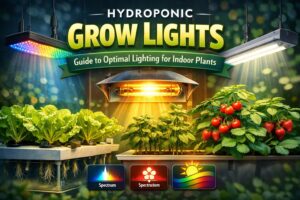 Indoor hydroponic gardening has experienced a surge in popularity, and at the heart of every successful setup lies one critical component: hydroponic grow lights. Since plants grown hydroponically don’t rely on sunlight, artificial lighting becomes their primary energy source. The right grow light can mean the difference between slow, weak growth and lush, high-yield plants.
In this guide, we’ll break down how hydroponic grow lights work, the different types available, and how to choose the best option for your indoor garden.
What Are Hydroponic Grow Lights?
Hydroponic grow lights are specially designed artificial lights that mimic the sun’s spectrum to support plant growth. Unlike standard household bulbs, grow lights provide the wavelengths plants need for photosynthesis, enabling them to grow, flower, and fruit indoors without natural sunlight.
Because hydroponic systems grow plants in nutrient-rich water rather than soil, lighting becomes even more important. With no environmental buffers, plants rely heavily on consistent, high-quality light to thrive.
Why Grow Lights Matter in Hydroponics
Plants use light energy to convert carbon dioxide and water into sugars—a process known as photosynthesis. In hydroponic systems, optimal lighting ensures:
-
-
- Faster and healthier plant growth
- Strong root and stem development
- Higher yields and better-quality produce
- Controlled growth cycles year-round
-
Without proper lighting, even the best nutrients and water systems won’t deliver results.
Understanding Light Spectrum and Plant Growth
Different stages of plant growth require different light spectrums:
-
-
- Blue light (400–500 nm): Encourages leafy growth and strong stems, ideal for seedlings and vegetative stages
- Red light (600–700 nm): Supports flowering and fruiting
- Full-spectrum light: Mimics natural sunlight and supports all growth stages
-
Modern grow lights often combine these spectrums into a single unit, making them versatile and easy to use.
Types of Hydroponic Grow Lights
LED Grow Lights
LED grow lights are currently the most popular choice for hydroponic growers.
Pros:
-
-
- Highly energy-efficient
- Long lifespan (often 50,000+ hours)
- Low heat output
- Available in full-spectrum options
-
Cons:
-
-
- Higher upfront cost (though cheaper long-term)
-
LEDs are ideal for beginners and experienced growers alike due to their efficiency and ease of use.
HID Grow Lights (HPS & MH)
High-Intensity Discharge (HID) lights include Metal Halide (MH) and High-Pressure Sodium (HPS) bulbs.
MH Lights:
-
-
- Best for vegetative growth
- Strong blue spectrum
-
HPS Lights:
-
-
- Excellent for flowering and fruiting
- Rich in red and orange wavelengths
-
Pros:
-
-
- High light output
- Proven results
-
Cons:
-
-
- High heat generation
- Higher electricity costs
- Shorter bulb lifespan
-
HID lights are powerful but require good ventilation and temperature control.
Fluorescent Grow Lights (T5, CFL)
Fluorescent lights are commonly used for seedlings, herbs, and small plants.
Pros:
-
-
- Affordable
- Low heat output
- Easy to install
-
Cons:
-
-
- Limited light intensity
- Not suitable for large or fruiting plants
-
They’re best suited for early growth stages or compact hydroponic systems.
How to Choose the Right Grow Light
When selecting a hydroponic grow light, consider the following factors:
- Plant Type
Leafy greens and herbs require less intense light than flowering or fruiting plants, such as tomatoes or peppers.
- Grow Space Size
Measure your grow area and match it with a light that provides adequate coverage. Manufacturers often specify the optimal coverage area.
- Light Intensity (PPFD)
Photosynthetic Photon Flux Density (PPFD) measures how much usable light reaches your plants. Different plants have different PPFD requirements.
- Heat Management
Excess heat can stress plants. LEDs are ideal for small or enclosed spaces due to minimal heat output.
- Energy Efficiency
Lower power consumption means reduced electricity bills and a more sustainable setup.
Positioning and Timing Your Grow Lights
Light Distance
-
-
- LEDs: 30–60 cm above plants (varies by model)
- HID lights: Usually further away due to heat
-
Always follow manufacturer guidelines and adjust based on plant response.
Light Schedule
-
-
- Seedlings: 16–18 hours per day
- Vegetative stage: 18–20 hours per day
- Flowering stage: 12 hours per day
-
Using a timer ensures consistency and reduces stress on plants.
Common Mistakes to Avoid
-
-
- Using household bulbs instead of proper grow lights
- Placing lights too close together, causing light burn
- Ignoring plant-specific light requirements
- Running lights 24/7 (plants need rest, too)
-
Avoiding these mistakes will dramatically improve your hydroponic success.
Final Thoughts
Hydroponic grow lights are the backbone of any indoor gardening system. Whether you’re growing herbs in a small apartment or running a full-scale hydroponic setup, choosing the right lighting will directly impact plant health, yield, and overall success.
By understanding light spectrums, growth stages, and system requirements, you can create an efficient, productive indoor garden that thrives year-round—no sunlight required.