




DWC Hybrid System
Contents
- 1 DWC Hybrid System
- 1.1 The Future of Efficient Hydroponic Growing
- 1.2 What Is a DWC Hybrid System?
- 1.3 How the DWC Hybrid System Works
- 1.4 Advantages of the DWC Hybrid System
- 1.5 Challenges of the DWC Hybrid System
- 1.6 How to Build a DWC Hybrid System
- 1.7 Best Plants for DWC Hybrid Systems
- 1.8 Conclusion
- 1.9 Deep Water Culture Hydroponic System
- 1.10 Deep Water Culture Hydroponic Systems (DWC):
- 1.11 How to Set Up a Small Hydroponic Kit at Home
The Future of Efficient Hydroponic Growing
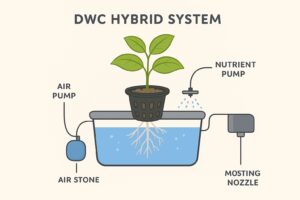 Hydroponic gardening continues to evolve as technology and innovation push the boundaries of sustainable food production. Among the most efficient and forward-thinking methods available today is the DWC Hybrid System, an advanced approach that combines features of Deep Water Culture (DWC) with other hydroponic methods such as Nutrient Film Technique (NFT) and Aeroponics.
This hybrid approach is designed to enhance nutrient delivery, oxygenation, and root health, key factors that contribute to vigorous plant growth and higher yields. Whether you’re a home grower or a commercial farmer, understanding how a DWC Hybrid System works can help you unlock the full potential of hydroponic growing.
What Is a DWC Hybrid System?
The DWC Hybrid System is a modern hydroponic setup that integrates two or more hydroponic methods to maximise efficiency and crop performance. Most commonly, it combines the Deep Water Culture method (where roots are submerged in nutrient-rich, oxygenated water) with the Nutrient Film Technique (NFT) or Aeroponics to create a dynamic growing environment.
In a traditional DWC system, plants sit in net pots suspended over a reservoir of nutrient solution. The roots remain submerged, and air stones continuously supply oxygen. In a hybrid variation, an additional system, like a nutrient film or mist spray, complements this setup, ensuring that roots receive an ideal mix of moisture, nutrients, and oxygen.
This hybridisation leads to healthier plants, faster growth cycles, and better resistance to environmental fluctuations.
How the DWC Hybrid System Works
The DWC Hybrid System operates on a few core principles of hydroponic science — constant nutrient access, oxygenation, and water circulation. Let’s break it down:
- The Base DWC System
At its foundation, the system uses a DWC reservoir filled with nutrient-enriched water. Plants are positioned in net pots held in a lid or floating raft so their roots hang into the solution. An air pump and air stones are installed to maintain oxygen flow.
- The Hybrid Component
The “hybrid” part introduces another layer of hydroponic functionality. There are several types of hybrid integrations:
-
-
- DWC + NFT: A thin film of nutrient solution flows over the roots while they’re partially submerged, combining continuous flow with oxygen-rich submersion.
- DWC + Aeroponics: A misting system sprays fine droplets of nutrients directly onto the root zone, improving oxygen and nutrient uptake.
- DWC + Drip Irrigation: Nutrient solution drips onto the plant base, providing extra moisture and improving root aeration.
-
- Oxygenation and Nutrient Circulation
Air pumps maintain oxygen levels, while water pumps or misters circulate nutrients throughout the system. This combination ensures that plants receive a balanced, highly oxygenated mix at all times — preventing stagnation and root disease.
- Controlled Environment
Because hybrid systems are often enclosed or partially automated, growers can precisely control pH, temperature, nutrient concentration, and oxygen levels, ensuring optimal growing conditions year-round.
Advantages of the DWC Hybrid System
The DWC Hybrid System is designed to overcome the limitations of traditional hydroponic methods by combining their best features. Here are its main advantages:
- Faster Growth Rates
Plants in a DWC Hybrid System grow up to 60% faster than those in soil because their roots constantly access perfectly balanced nutrients and oxygen.
- Greater Oxygen Absorption
The hybrid design ensures roots receive continuous oxygen exposure through both the air stones (in the water) and supplemental aeration from mist or nutrient film.
- Reduced Risk of Root Rot
Traditional DWC systems can suffer from oxygen deprivation in stagnant water. The hybrid model prevents this by maintaining water movement or mist circulation.
- Customisable for Any Crop
Hybrid systems can be adjusted to suit different plant types — from fast-growing leafy greens to larger fruiting crops like tomatoes, peppers, or cucumbers.
- Efficient Resource Use
The system recycles water and nutrients continuously, reducing overall consumption while maintaining consistent nutrient levels.
- Scalable and Automated
Ideal for both small indoor setups and large-scale operations, hybrid systems can integrate sensors, timers, and automated pumps for precision growing.
Challenges of the DWC Hybrid System
While powerful and efficient, hybrid systems do require some care and understanding.
-
-
- Higher Initial Cost:
The additional components (pumps, misters, tubing) increase setup costs compared to basic hydroponic systems. - Technical Complexity:
The integration of multiple systems means there are more parts to monitor and maintain. - Power Dependency:
Like most hydroponic setups, the system relies heavily on electricity to run pumps and aeration equipment. - Monitoring Required:
Nutrient levels, pH, and temperature should be checked frequently to prevent imbalances.
- Higher Initial Cost:
-
Despite these challenges, the benefits far outweigh the learning curve once the system is properly set up.
How to Build a DWC Hybrid System
Setting up a hybrid system may sound complex, but with the right tools, it’s manageable. Here’s a simple breakdown:
Step 1: Choose Your Base
Start with a DWC base setup, a container or reservoir that holds the nutrient solution, with a lid to support your net pots.
Step 2: Add Aeration
Install an air pump and air stones to oxygenate the water continuously.
Step 3: Integrate the Hybrid Component
Decide which secondary system to add:
- For DWC + NFT, install a pump that circulates water across the roots before returning it to the reservoir.
- For DWC + Aeroponics, set up misting nozzles below the plants to spray nutrients periodically.
- For DWC + Drip, attach small tubing lines to deliver nutrients to the top of each pot.
Step 4: Mix Nutrients
Fill the reservoir with water and add a hydroponic nutrient solution, maintaining a pH between 5.8–6.2.
Step 5: Insert Plants
Place seedlings into the net pots with a lightweight growing medium (such as clay pebbles or coco coir).
Step 6: Monitor and Maintain
Regularly check oxygen levels, nutrient concentration (EC), and pH. Clean your system every few weeks to avoid residue buildup.
Best Plants for DWC Hybrid Systems
The DWC Hybrid System can support a wide range of crops. Here are some top performers:
-
-
- Leafy greens: Lettuce, spinach, kale, and arugula
- Herbs: Basil, mint, parsley, and coriander
- Fruiting plants: Tomatoes, peppers, and cucumbers
- Flowers: Orchids and small flowering herbs
-
These plants benefit from high oxygen levels and constant access to nutrients — exactly what the hybrid system provides.
Tips for Success
-
-
- Maintain the nutrient temperature between 18°C and 22°C to prevent root rot.
- Use black or opaque reservoirs to block light and reduce algae growth.
- Invest in timers and pH meters for automation and accuracy.
- Clean all equipment regularly to prevent clogs and bacterial buildup.
- Ensure your air pump runs 24/7 for maximum oxygenation.
-
Conclusion
The DWC Hybrid System is at the cutting edge of hydroponic technology — merging the efficiency of Deep Water Culture with the versatility of NFT, Aeroponics, or Drip systems. It’s an excellent choice for growers who want faster growth, higher yields, and greater control over their crops.
By combining systems, you create a more resilient and productive environment that makes hydroponic gardening not just easier, but smarter. Whether you’re a beginner looking to experiment or an advanced grower ready to scale up, the DWC Hybrid System offers endless potential for innovation and success.